
Where Are The Prophets?
It’s Easier to be a Preacher Than a Prophet.

Whenever I lecture on the Old Testament prophets, someone in the audience inevitably asks: “Are there any prophets left today?” I pause—not because I don’t have an answer, but because the real question underneath it is harder to face: Would we even recognize one if we saw one?
Don’t feel bad if it’s hard to tell. It’s always been hard. In times of crisis, people want experts, forecasters, and someone to make sense of the chaos. The exiles in Babylon wanted that too. They had Jeremiah on one corner saying, Settle in, this will take a while, and Hananiah on another promising, Don’t worry, it’ll all be over soon. Both claimed to speak for God. Both sounded convincing.
That’s the trouble. Religious leaders rarely agree. But there’s a difference between disagreeing over doctrine and disagreeing over whether it is God’s will for people to be stripped, crushed, or erased in the name of order or national pride. As the writer James Baldwin said, we can disagree and still love each other, unless your disagreement is rooted in my oppression and denial of my humanity.
Jeremiah and Hananiah represent two responses to collapse. Jeremiah knew things were vanishing—that Jerusalem would fall, that exile was coming. His message was grief-soaked and grounded. Hananiah insisted it was temporary. He offered what people most want in a crisis: reassurance.
The question of who speaks for God—and who merely speaks for the status quo- has never gone away. Rev. Dr. Marvin McMickle posed it nearly twenty years ago in his book Where Have All the Prophets Gone? The title has stayed with me ever since I first read it. McMickle warned that prophetic preaching in America was being drowned out by praise, patriotism, and prosperity. He was right then, and he’s right now.
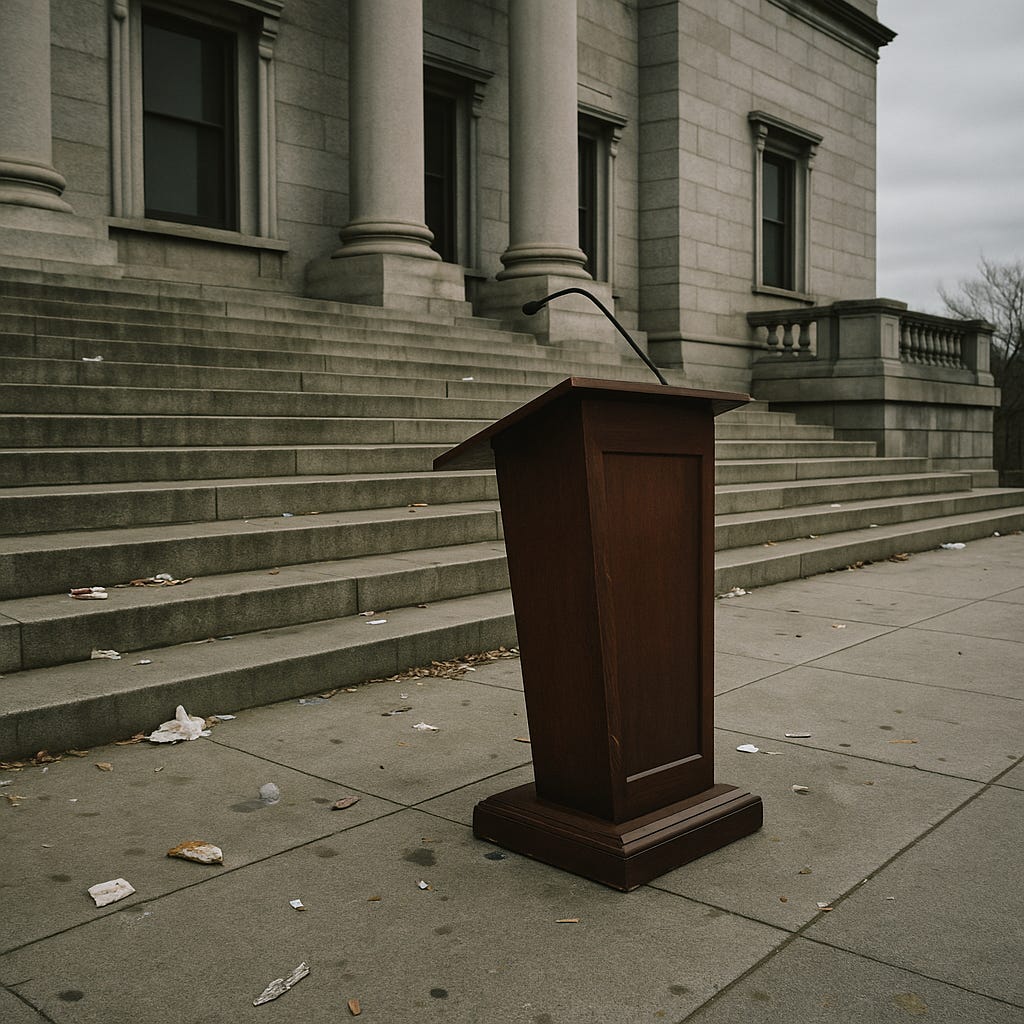
Hananiah was the more popular preacher. His version of faith didn’t require mourning or change. But Jeremiah saw that pretending things weren’t falling apart was its own kind of blasphemy.
And trust me, things are falling apart all around us today. Even after this administration and its sycophants fade from the scene, it will take a generation—maybe more—to repair the breaches, rebuild what’s been dismantled, and regain the confidence of a citizenry that has lived through cruelty and trauma. There is no “normal” to return to. The imperfect world we once trusted is gone. The work ahead will be not to rebuild what was, but to learn from what failed and build something wiser, sturdier, more just.
But still there’s that darn question. Are there prophets today? It’s a hard question. I know plenty of brilliant preachers, faithful teachers who comfort and inspire, but I hesitate to call them prophets in the biblical sense of the word.
Preachers work inside the house of faith, helping us understand what we believe and how to live it. They steady us. Prophets speak from the edges of that house, sometimes from outside it altogether. They don’t just interpret God’s word; they announce God’s verdict.
And it’s dangerous work. Prophets in the Bible didn’t volunteer for it. They argued, resisted, ran, and hid. Jeremiah wept. Jonah fled. Moses tried to negotiate. Being a prophet wasn’t an honor. Being a prophet was a wound, a summons that shattered whatever peace they’d made with the world. Besides, prophets are not loved by the systems they challenge. They’re reviled, discredited, sometimes destroyed even by hometown folks who are supposed to know their hearts. No one in her right mind signs up for that kind of work.
The prophet Amos knew that feeling. When pressed for his credentials, he said, “I am no prophet, nor a prophet’s son. I’m a herdsman, a dresser of sycamore trees.” In other words: I didn’t choose this. I was drafted.
And so are we.
We can’t all be prophets, but the times are such that each of us will have to make prophetic decisions. There will be moments when we must choose between silence and speech, between complicity and conscience.
It’s an FBI agent refusing an order that betrays his oath. It’s a judge who won’t rubber-stamp an unjust law, a nurse who tells the doctor, You will not speak to my patient that way. It’s a writer who risks saying what polite society doesn’t want to hear. It’s a principal who refuses to let ICE agents step onto her school grounds. or a voter who refuses to be turned away yet again. Sometimes it’s a friend who won’t laugh when cruelty passes for humor, an employer who protects undocumented workers, or a church member who dares to ask why God supposedly calls men to preach but not women. Being a prophet begins in the gut, in that sacred unrest within that whisper: This cannot be right. Not in my presence.
So you see, prophets aren’t always in pulpits or wearing robes. Some sing. Some write poems that say what politics cannot. Some turn comedy into truth-telling or choreography into lament. Prophets appear wherever people refuse to let cruelty have the last word—wherever beauty, courage, and imagination become acts of defiance. Their message is the same: the world as it is cannot be the world as God intends.
The late Old Testament scholar Walter Brueggemann reminds us that the prophet doesn’t simply denounce what is; she announces what could be—the something new already rising on the horizon.
I am no prophet. I can’t, for the life of me, imagine what that new thing is. My vision is blurred by the dread and dismay I feel these days. I can’t see it. And I worry that I’m doing those coming behind me a disservice by not being wiser or braver.
But I trust it’s coming anyway. I believe, as Dr. King said, that the arc of the moral universe bends toward justice—and I also know it can snap back. Tyrants will seize it again, as they always do, and those coming behind will have to fight for it all over. That’s the rhythm of history and the cost of faith.
It’s always been hard to know who the true prophets are. People weren’t sure about Jeremiah, or Amos, or Isaiah either. Only time will tell whose words were born of fear and whose were born of God. In the meantime, what we need are people willing to tell the truth as they see it, to hold fast to compassion, to refuse the seductions of cruelty and convenience. We need people who will keep faith when the evidence runs out, who will speak even when their voices tremble.
That’s enough for now. The rest time will reveal.
Thank you for regularly picking up your pen to make an investment. You may not consider yourself a prophet but your words have a way of piercing souls and WAKING the listener!
As I ponder your question and read your response, I'm not wondering over the whereabouts of the prophets. You are one whether you want to be or not. Your words are prophetic words, your sensibilities are propehtic sensibilities, your truth-telling is prophetic truth-telling, and your assessment of this moment is a prophetic assessment. You may sit in a scholars chair and wear a scholars hat, but your scholarship connects us to the heart of the prophet. Thank you my dear sister, for courageously sharing the heart of a prophet.